Give It Heaps
Racing a Mazda BT-50 at the Sunraysia Safari
Give It Heaps
Racing a Mazda BT-50 at the Sunraysia Safari
Was that a silent scream or gasp of joy? In all this excitement, churning red sand, muddy water explosions and dusty desert drifting, my head can no longer tell the difference.
Things happen quickly at the Sunraysia Safari: a marathon 1,179 kilometres of competitive closed tracks, sand dunes and wildflower plains in sparsely populated far west New South Wales.
Learning comes quickly too. Have a double shot espresso before setting off. Sling electrolyte tablets in your water bottle then tie it down. And never, ever start a two-hour rally stage without a perfectly empty bladder.
What is Sunraysia Safari?
Sunraysia’s billed as Australia’s greatest motorsport adventure. Trails, sandy tracks and lush green fields across private farmland, dishing up an arduous odyssey for thrill-seeking off-roaders. Men and women with dust in their veins.
If, like me, you’re not one for a book-by-the-pool holiday, a four-day safari rally sounds far more tell-your-mates worthy. And you don’t need to be Toby Price to compete, although the two-time Dakar Rally champ was at the 2026 Sunraysia to snare outright victory.
What is a Regularity rally?
This year, a Rally Regularity division debuted for near-standard vehicles, with no Competition licence required, just a basic easy-apply Motorsport Australia Speed licence. You and a co-driver only need helmets and the car a fire extinguisher and you’re good to go.
How we set up the Mazda BT-50 SP
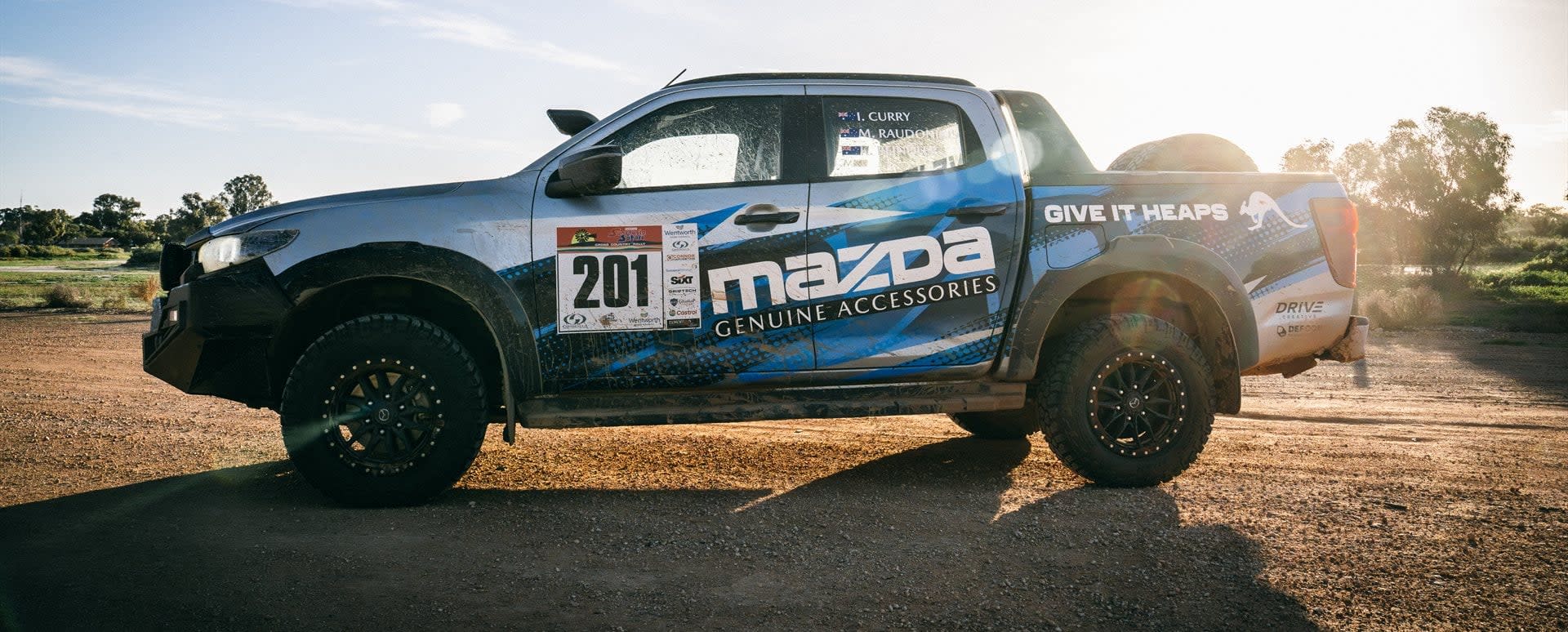
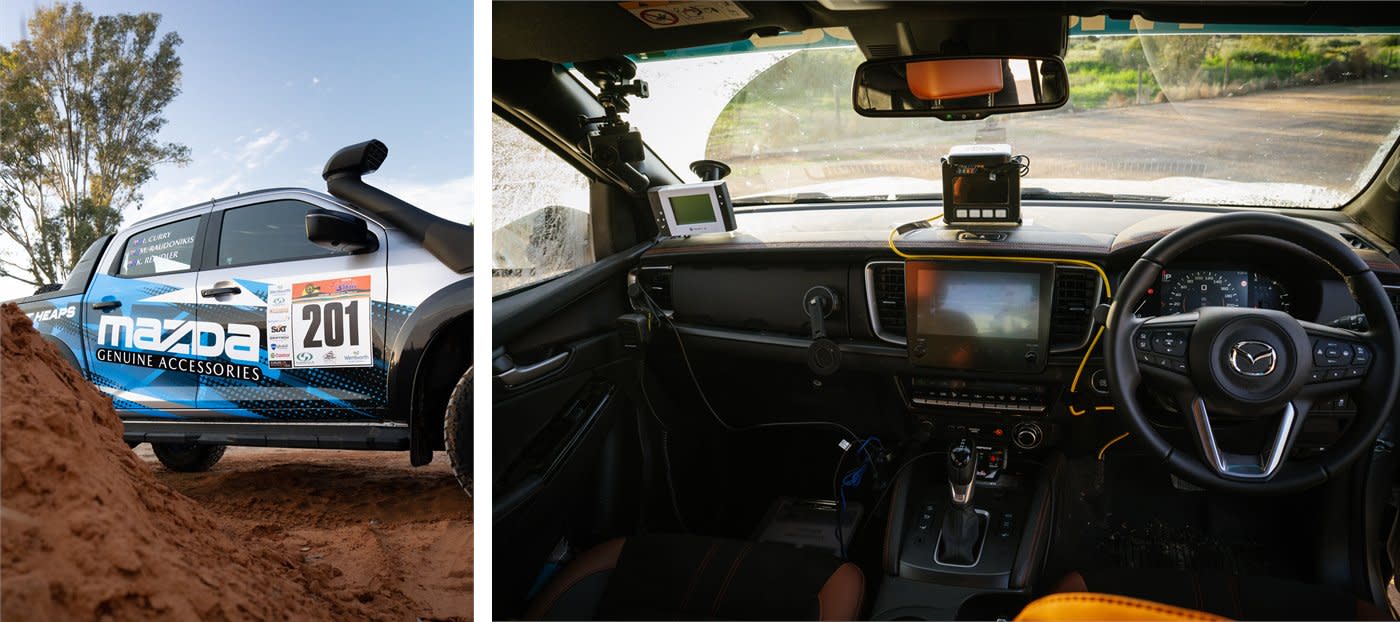
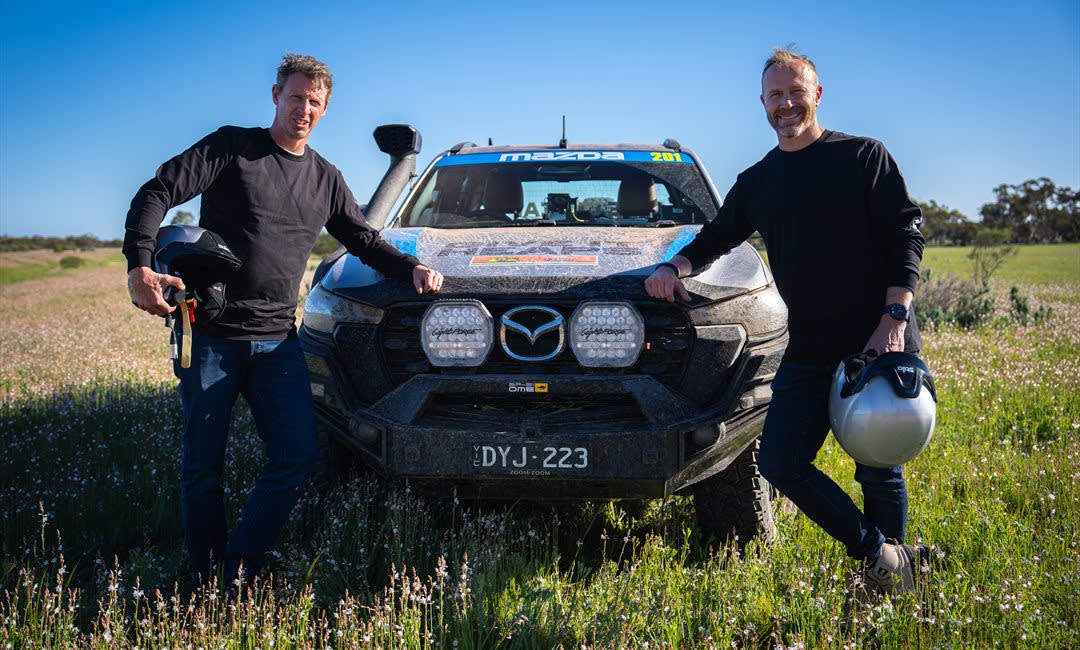
We came armed with a Mazda BT-50 SP 4x4 dual cab ute, recently driven off the showroom floor. But same as any sport, optimised equipment makes life easier. Usain Bolt’s still fast running barefoot, but spiked shoes never did any harm.
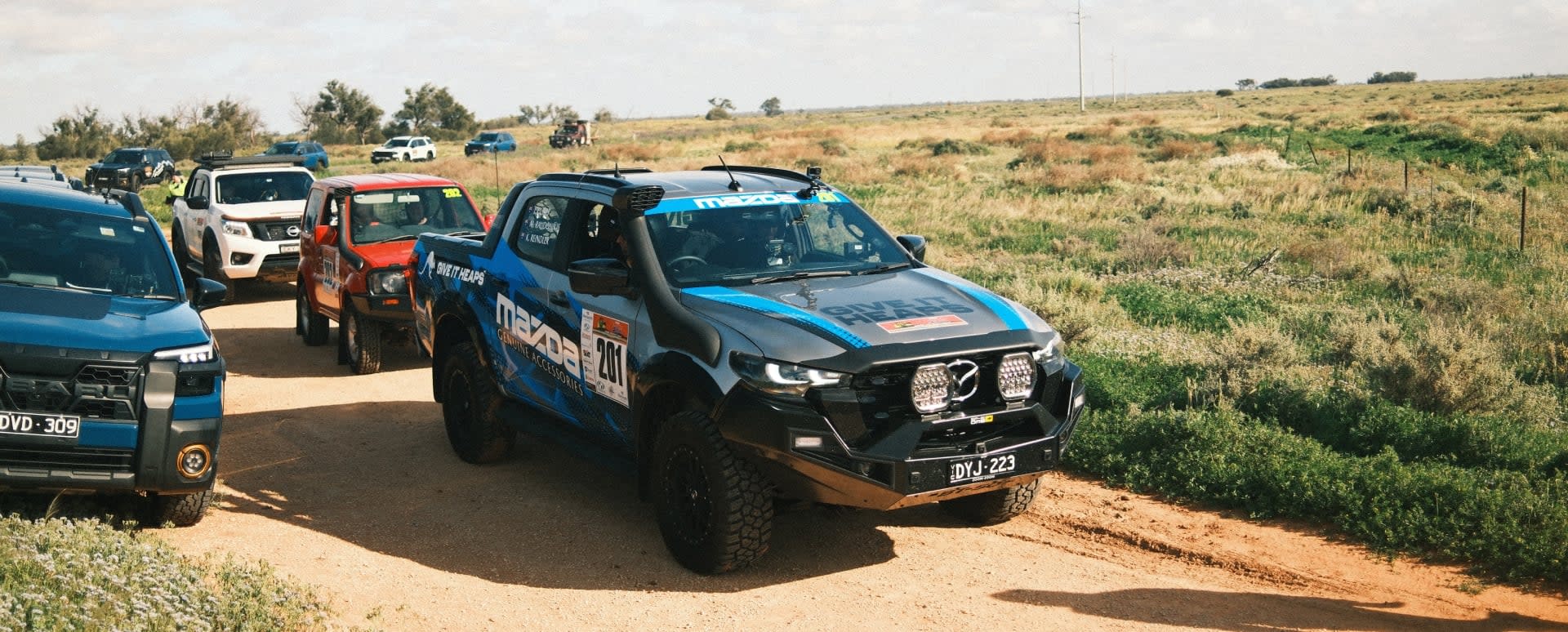
From Mazda’s Genuine Accessories portfolio, on went a snorkel, reinforced side steps, single hoop bull bar, spotlights and black 17-inch beadlock-like alloys. And proving ideal for Sunraysia’s variable terrain, adjustable BP-51 suspension, rugged all-terrain tyres and a couple of spares in the tray.
And who could resist slinging on race livery and “Give It Heaps” kangaroo stickers? No doubt, we were now aptly dressed to get our ute’s boots muddy.
Why the co-driver matters more than the driver
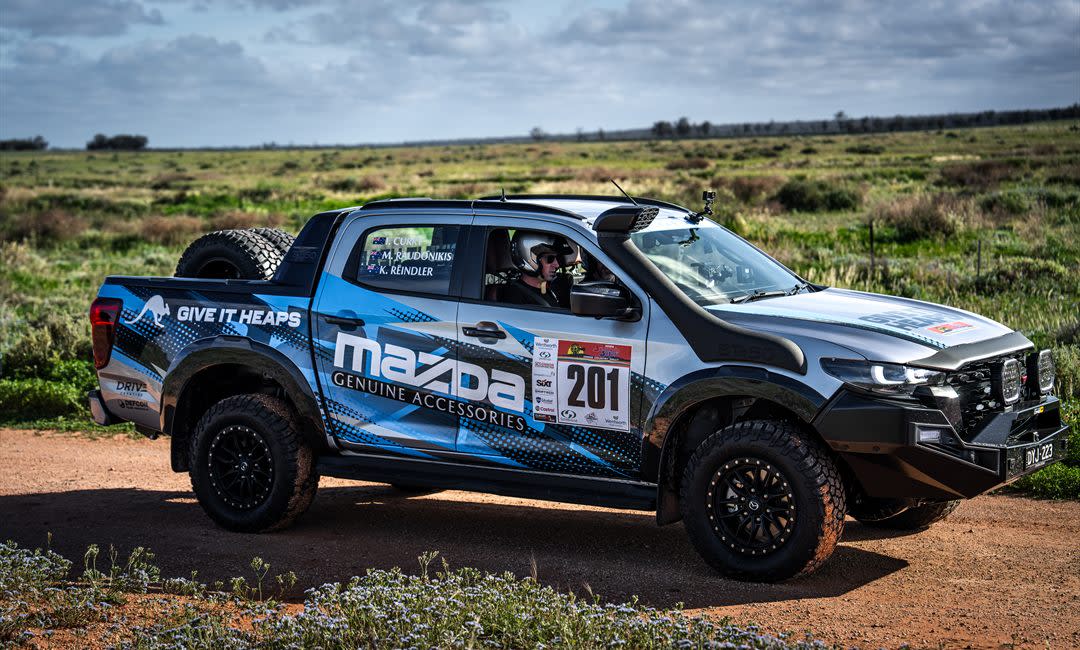
A final puzzle piece is key. The co-driver. Rally Regularity means hitting a stage time and average speed set by the organisers, with points deducted for every second over or under the target. The one in the passenger seat reads the roadbook (where to turn, hazard alerts, etc.) and does the maths to try finishing the stage right on cue.
Bring your spouse. Your best mate. Or, if you’re lucky like me, ex-Supercars ace and current F1 Medical Car driver Karl Reindler. Perversely, the one who really knows how to drive starts our safari with a rally book and not steering wheel in his hands. No pressure on me then.
Stage one: 73 kilometres of learning the hard way
First stage is 73 kilometres, we’re limited to 110km/h (patrolled by GPS) and must be done at an average of 63km/h. Pfft. Sounds easy.
Until we’re at walking pace churning through soft sand, then threading the needle between trees and low branches, not to mention gutters, holes, humps and hard to spot turns. Woah. This is tough.
Remember about learning quickly? Turns out braking points are far earlier on loose dirt, so Sebastien Loeb won’t have worried watching me overshoot the very first turn. My co-driver’s now in no doubt there’s not an undiscovered rally prodigy sat beside him.
Concentrate, lad. Keep your eyes up. Look at the horizon. Follow the tell-tale wheel marks of proper rally drivers who’ve navigated the trails just before you. But even the best – Toby Price included – have dramas finding the way in unseasonally long grass high as the BT-50’s bonnet.
“Generally, if you drive 10 per cent slower you’ll end up five per cent faster because you’ll get the navigation correct,” event organiser Troy Bennett had sagely told me. Race driver Karl thinks not. “Just send it” he grins, confident his sharp instructions have us covered as long as I point our ute the way he signals.
Finding a rhythm on loose dirt
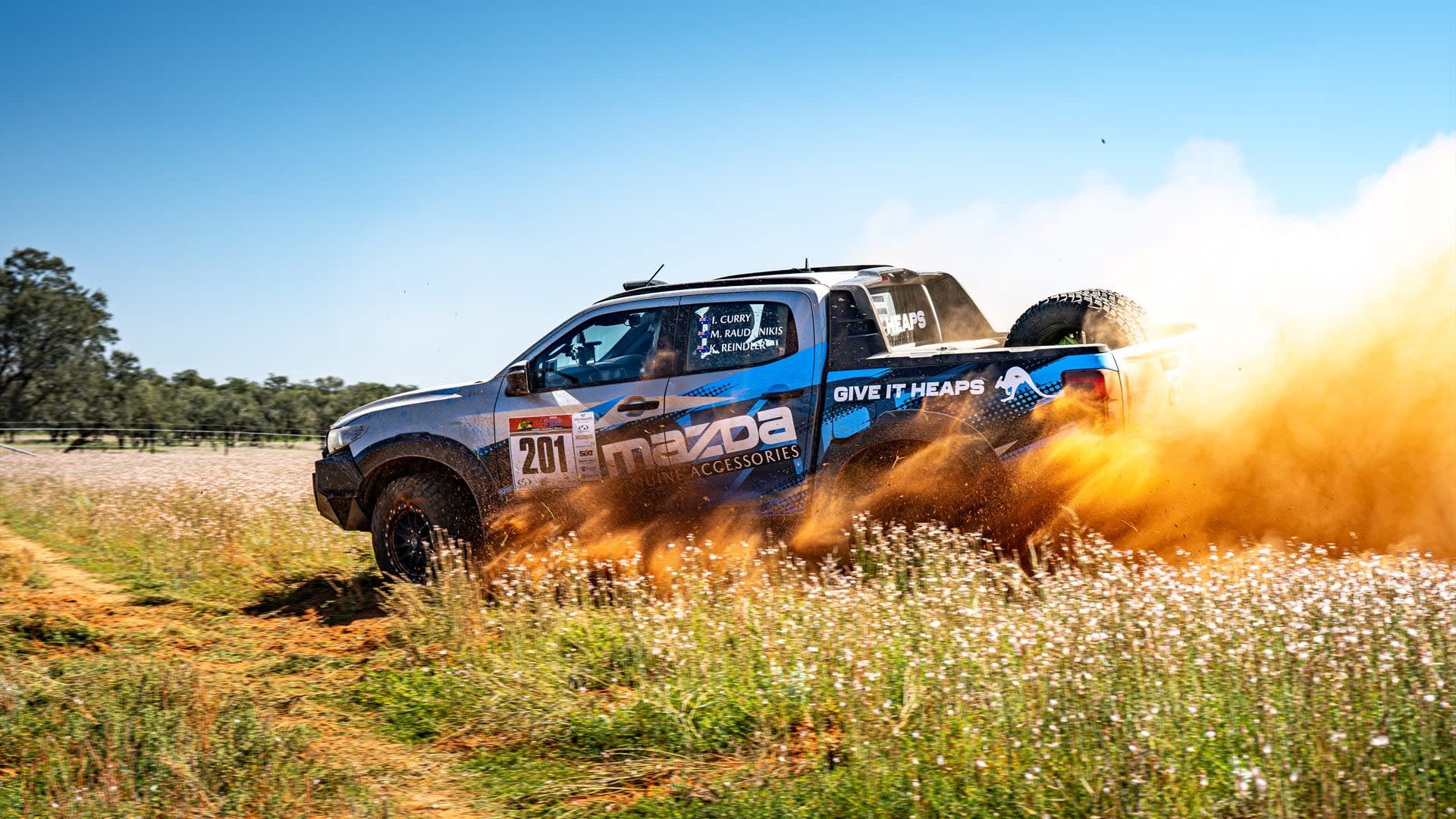
Then, like magic, a driving rhythm arrives. In soft sand or loose dirt the BT-50 works at its fluid best with traction and stability control disabled. We have the option of rear- or all-wheel-drive, plus low range 4x4 should things get totally treacherous.
But the ute proves so capable, power sent only to the two rears feels the sweetest and, importantly, the funnest. Our BT-50 dances between the twists and turns of this colourful terrain, switching from red to orange to salmon pink, bursting a technicolour mist behind.
Now this is driving. This is adventure.

And what a challenge. The terrain changes in a heartbeat. Hard-packed dirt, then stones, fine sand and wet, slippery grassland. I’m learning to drift and turn the BT-50 using the throttle more than steering wheel, channelling my undiscovered inner Colin McRae I always knew was there.
Until I miss another turn. Then go the wrong way along a fenceline. Then – schoolboy error – forget to turn the wipers on before barrelling into a giant water splash.
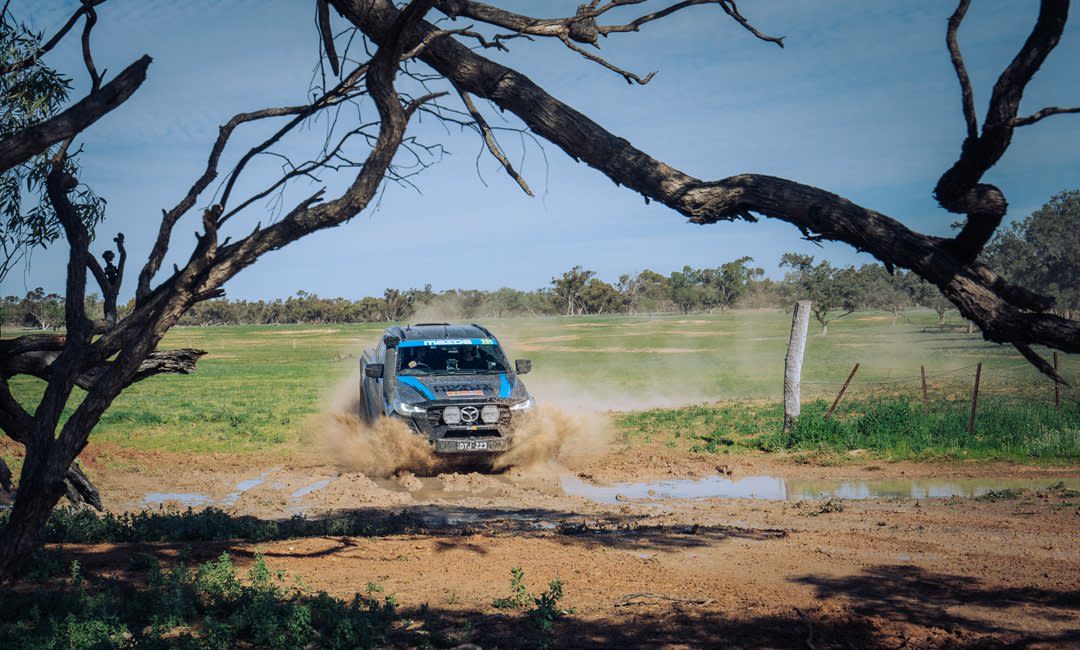
Yet somehow we ace the stage and finish seven seconds off perfect. For stage two – some 100 kilometres – Karl takes the controls. “Big shoes to fill,” I remind him.
The proper race driver proves annoyingly excellent at high-speed dirt drifting, fingertip control, and giving Hollywood-like footage to the camera crew in an overhead helicopter. He’s one second off perfect at the line. I insist due to my faultless navigating.
We rest well that evening. Our BT-50 looks resplendent in the outback parc fermé, coated in dust, dirt and wheel arches caked in baked-on mud. We decide it’d be sacrilegious to clean her.
We join our co-competitors for hot grub and tales of adventure. The competition race bikes and cars – from Mad Max-esque modifieds to a carbon-bodied rally raid monster – have registered times we can’t fathom. From my seat, I’d not want to be going any faster. Rally Regularity feels ideally suited for we normal folk.
Day two: 245 kilometres, three hours, one fuel stop
A stage on the second day is – gulp – 245 kilometres long, at 70km/h average, and over three hours. It’s a quad-shot coffee morning. With a fuel stop halfway (strictly timed), driving duties are shared and our driver/navigator partnership feels akin to Hayden and Langer in their pomp.
Okay, I drove a few kilometres through a field in the wrong direction, giving silky-skills Reindler more work to do. No matter. He slides over the finish line again one second off the organiser’s target. “Could be better,” we agree, grinning like schoolboys after an unholy amount of tiring, dusty and magnificent driving fun.


How it ended
At halfway we’re leading our class by an outback country mile, but here’s where motorsport can be cruel.
I hand the BT-50’s reins to another driver for the final two days, and a hidden rut brings rotten luck on a remote transport stage, forcing the ute’s retirement.

But the memories remain. Sliding our muscled Mazda across vivid landscapes, we shone brightly in this harsh old land. Give it heaps? Yes we did.